I Have Proof an Ocarina of Time Remake Would Be Great
Not a leak. Not unseen footage. The proof is Nintendo’s record with every 3D Zelda game it has already made.
Watch the video version on YouTube
The short version
- Nintendo officially announced the Ocarina of Time remake on June 9, 2026; this opinion explains why the series’ record made me confident before the announcement.
- Every main 3D Zelda game is remembered for different strengths, but none of them is a bad game.
- Nintendo’s seven-game record is the reason I trust it to make an Ocarina remake worth playing.
The proof is Nintendo’s own history
Nintendo officially announced The Legend of Zelda: Ocarina of Time for Nintendo Switch 2 on June 9, 2026. My confidence that it will be great does not come from a leak, an insider, or unseen game footage. It comes from Nintendo’s own history with 3D Zelda games.
Whenever people argue about which 3D Zelda game is the best, almost nobody is arguing over which ones are good and which ones are bad. They argue over which strengths they prefer. One game has the best dungeons. Another has the best story. Another has the best world, music, characters, or combat. Even Skyward Sword is well known for having one of the series’ best stories and for building a real relationship between Link and Zelda.
Every main 3D Zelda game is known for something. None of them has disappointed me. That record is why I am not worried about what Nintendo will do with Ocarina of Time.
Ocarina of Time set the standard
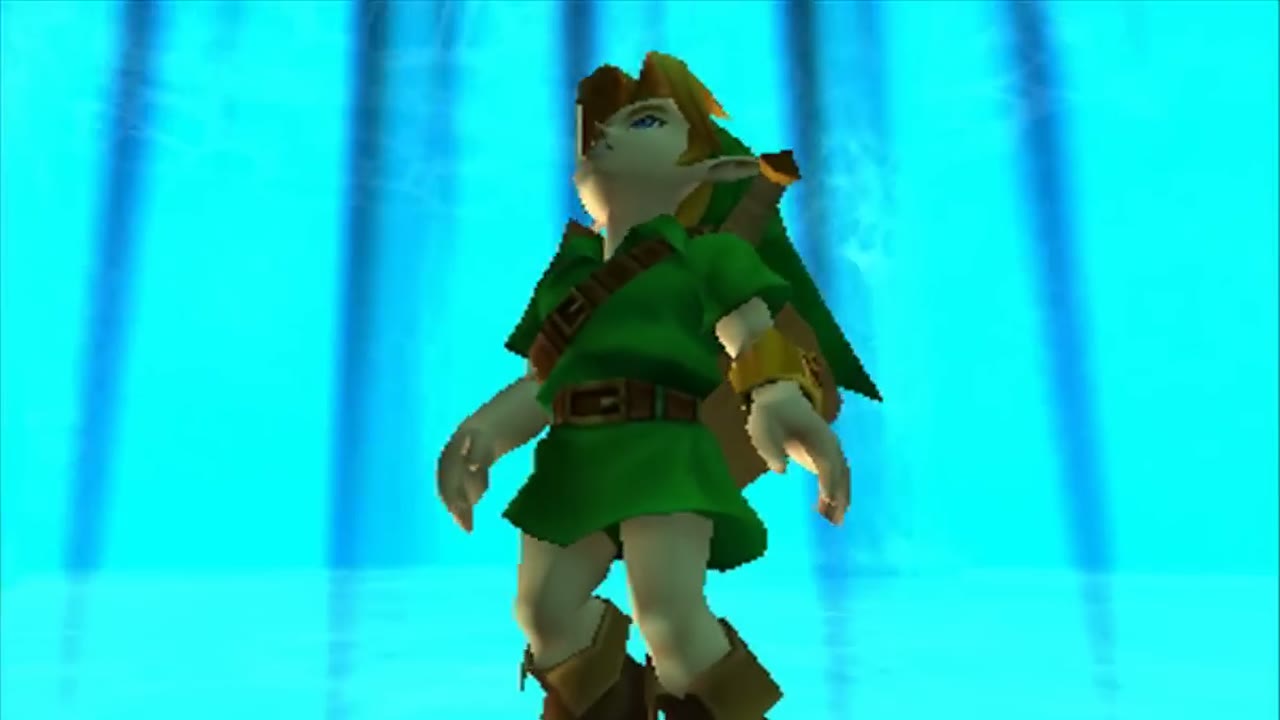
Ocarina of Time was the first 3D Zelda, and it was a masterpiece of 3D adventure. It told an epic story about a boy who pulls the Master Sword, is sealed away for seven years, and wakes up in a ruined Hyrule that Ganondorf has taken over.
The dungeons were top tier—except for that one dungeon that shall not be named. Hyrule Field felt enormous. The Kokiri Forest felt like home. Riding Epona, meeting the Sages, hearing the music, and watching the world change between childhood and adulthood made the adventure feel much bigger than the hardware running it.
It did not merely translate Zelda into 3D. It helped establish how 3D adventure games could work. More than twenty-five years later, people still argue about it because the game gave them so much to remember.
Majora’s Mask built a world around people
Majora’s Mask built on that foundation. Not everyone loved its dungeons or its three-day clock, but its character building has never been beaten. An entire town watches a horrifying moon move closer to destroying it. As the final day approaches, its people move through denial, fear, anger, and acceptance while Link keeps reliving the same three days.
The side quests were unmatched. You help save a marriage. You watch a mayor try to keep his town together. You fight off an alien invasion to save some cows. You race dogs. You deliver paper to a disembodied hand living in a toilet. This game had everything, and I think everyone who played it remembers rolling around Termina Field as a spiked Goron.
Majora’s Mask took familiar Ocarina parts and used them to make something completely different. That willingness to change is one of the reasons the series has lasted.
The Wind Waker proved the art style was not the game
The Wind Waker was not received warmly by everyone when Nintendo first showed its art style. It went on to become one of the most fondly remembered Zelda games because people finally looked past what they thought they wanted and played it. The game underneath that style is one of the series’ best.
Its story is tight. The dungeons are good. The gameplay is fun. It moves cleanly from your sister being kidnapped by a giant bird to a one-on-one fight with Ganondorf beneath the ocean, on top of the old Hyrule Castle. Sailing feels good. Watching the King of Red Lions pull up another treasure chest feels good. There is even a stealth mission where Link pulls a Metal Gear Solid under a barrel.
The Wind Waker also gave the Triforce weight. It was not only a symbol in the background. It was an object with real power, fought over by people with different ideas about what Hyrule should become. The Wind Waker is amazing.
Twilight Princess went bigger
Twilight Princess took almost everything I liked about The Wind Waker, made it bigger, and put it in the visual style fans had been asking for. Ordon Village felt like a real home. Midna became a companion worth caring about. Hyrule looked like a land that could slip away at any moment.
It also had more truly epic scenes than any Zelda before it: dueling on horseback across a bridge, turning into a wolf for the first time, entering the Twilight Realm, fighting puppet Zelda, and finding the Hidden Village. No one doubts how good this game is. I just wrote an entire article about why it still deserves to be played instead of treated like an annual re-release rumor.
Even Skyward Sword is a great game
Skyward Sword is a divisive title, but even it is a great game. If I ranked it last among the 3D Zelda games, I would still call it a nine out of ten. That says more about the quality of this series than it does about Skyward Sword.
It finally built a real friendship between Link and Zelda. Link was not only trying to save the world or rescue a princess he barely knew. It felt personal. Every time Zelda slipped away, it hurt because Link was trying to save his best friend. Skyloft, the surface, the dungeons, the sword combat, and the origin of the Master Sword gave the game its own identity.
Breath of the Wild changed Zelda’s scale
Breath of the Wild needs very little explanation. It took Zelda from a Nintendo favorite to the center of the wider gaming conversation. It brought in players who had never bought a Nintendo system just for Zelda and showed them why the series mattered.
Its world was massive, open, and filled with puzzles. The combat felt smooth. The art style still looks good. Its story was excellent if you were willing to search for it, read the journals, and piece together what happened. Most importantly, it trusted players to choose a direction and discover something for themselves.
Tears of the Kingdom expanded the possibilities
Tears of the Kingdom built on almost everything Breath of the Wild did. It expanded the world, the combat, the story, and the possibilities. Then Nintendo added a full building system that let players fly, drive, shoot, trap enemies, solve puzzles, or build something completely absurd.
Ultrahand could have been the central mechanic in a smaller game. Nintendo put it inside an already enormous Zelda adventure, alongside Fuse, Ascend, Recall, the sky islands, and the Depths. It was another example of this series refusing to make the same game twice.
Seven games, seven different strengths
So why do I believe the announced Ocarina of Time remake will be amazing? Because there has never been a bad main 3D Zelda game. Zelda fans do not debate which of these games were good and which were bad. They argue about which one had their favorite story, dungeons, music, world, art style, characters, or combat.
Everyone knows Zelda’s Lullaby—you probably just played the jingle in your head. Everyone remembers the moon in Majora’s Mask, the King of Red Lions in The Wind Waker, Midna riding on Wolf Link, jumping from Skyloft toward a Loftwing, discovering the Sheikah Slate, and using Ultrahand to build something ridiculous.
All seven main 3D Zelda games have been great. Nintendo is now remaking Ocarina of Time, and I do not need a leak to tell me what to expect. Nintendo’s own history is enough. The Ocarina of Time remake will be no different.
Sources and transparency
- Nintendo · June 9, 2026 Nintendo Direct announcement
- Nintendo · Ocarina of Time 3D official game page
- Nintendo · Majora’s Mask 3D official game page
- Nintendo · The Wind Waker HD official feature
- Nintendo · Twilight Princess HD official feature
- Nintendo · Skyward Sword HD official game site
- Nintendo · Breath of the Wild official game page
- Nintendo · Tears of the Kingdom official game page