Ocarina of Time Launches November 5—Here’s How the Remake Plays
Nintendo’s Switch 2 remake adds manual jumping, voiced cutscenes, a story tracker, and Zelda Notes while keeping a deliberately familiar Hyrule.
Watch the video version on YouTube
The short version
- The Switch 2 remake launches November 5, 2026.
- Link can jump with a button, dash across the field, and use a freely controlled camera.
- Nintendo has expanded character dialogue and confirmed voiced characters in in-game cutscenes.
- Threads of Time tracks story progress and the next objective; the original area-based structure remains.
A familiar adventure with different controls
The Legend of Zelda: Ocarina of Time launches on Nintendo Switch 2 on November 5, 2026. Nintendo confirmed the date during its September 8 Zelda Direct, alongside a substantial demonstration of how the remake actually plays. Eiji Aonuma showed Kokiri Forest, the Great Deku Tree dungeon, Hyrule Field, and Castle Town, explaining which parts of the Nintendo 64 adventure have changed.
The central approach is a faithful remake using modern technology, not a conversion into Breath of the Wild. Aonuma specifically contrasted Ocarina’s appeal with the freedom of Nintendo’s later open-world Zelda games. The demonstration still revolves around meeting characters, finding useful items, entering dungeons, and using what you learn to progress.
The controls are not frozen in 1998. Link can jump at the press of a button instead of relying only on automatic jumps at ledges. The camera can rotate freely around him. In Hyrule Field, holding A makes him roll and then dash, providing a faster way to cover longer distances.
New dialogue and a busier Castle Town
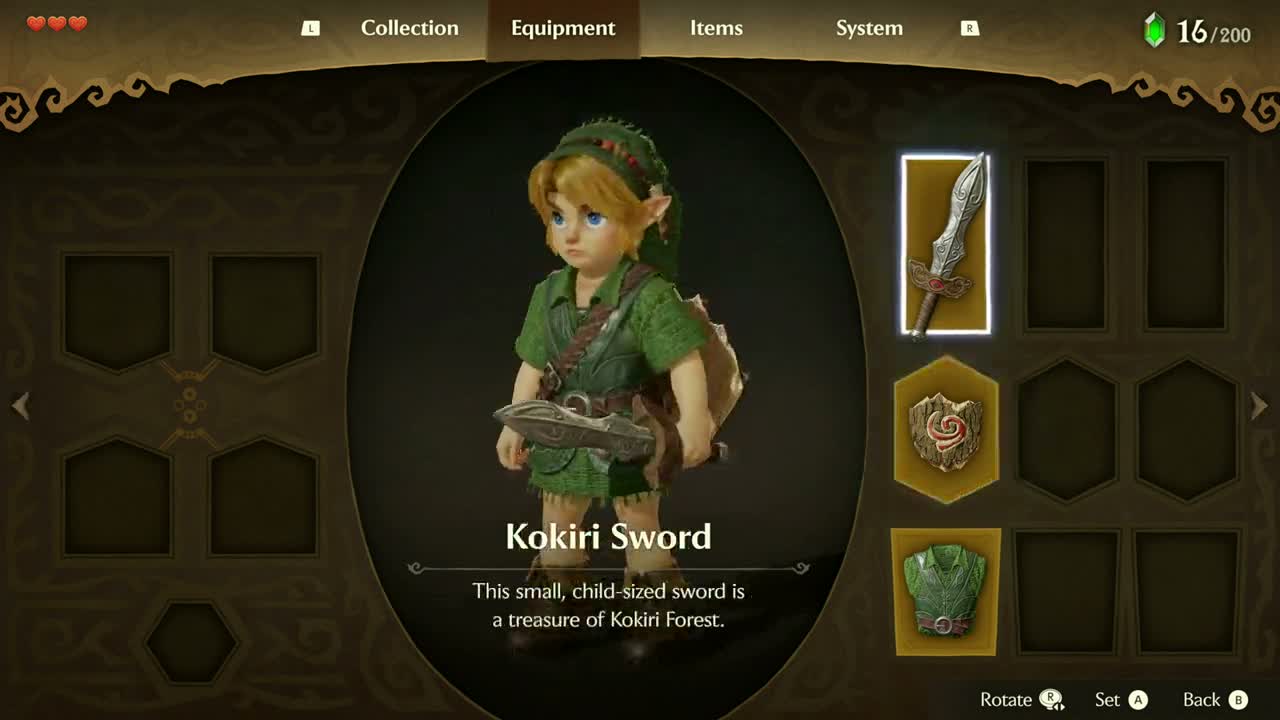
Nintendo has rebuilt the visuals, including Link’s clothing and equipment. Aonuma said the aim was not simply realism: the team wanted a remade world that still brought back the feeling of the original. The equipment screen gives a close look at the new character model and the materials used for familiar items.
Conversations have received attention too. During a meeting with Saria, Aonuma explained that the game contains substantial new dialogue intended to give its characters more personality. He later confirmed that the characters Link meets are fully voiced during in-game cutscenes. That statement concerns cutscenes; it is not a promise that every line of incidental dialogue is spoken.
Castle Town was shown as a busy space with a freely moving camera, back alleys, townspeople, and shops. Nintendo has added detail to areas that previously functioned as backdrops. Time also continues to pass while Link is in town, rather than stopping there as it did in the original game.
The dungeon still teaches you how its items work
Inside the Great Deku Tree, Nintendo demonstrated the familiar relationship between combat, exploration, and equipment. Navi can offer information about enemies. Deku Nuts stun them. Link obtains the slingshot, then uses it to solve a problem that blocks his route through the dungeon.
The remake adds single-button item switching and motion-controlled slingshot aiming. Aonuma also described the action as snappier, but this was Nintendo’s own demonstration, not our performance test. We have not played the remake and are not assigning it a review score from a video.
The important point is that the sequence still gives Link an item and asks the player to recognize where to use it. Nintendo is updating the controls and presentation while showing the kind of focused dungeon progression that made Ocarina different from the newer open-world games.
Threads of Time could help players return after a break
A new feature called Threads of Time shows the progress made in the story and the next objective. Aonuma described a large tapestry that gradually fills in during the adventure. That gives players a record to check rather than relying entirely on remembering the last conversation they had.
For someone fitting a long adventure around work and family, that could be one of the more useful additions. It will take hands-on time to judge how well it works, but knowing where you left off is a practical improvement—not just another graphical change.
Nintendo has also deliberately retained loading transitions between certain areas to preserve the original game’s character. This is still an adventure built around connected locations, not a claim that every boundary has disappeared into one seamless world.
Zelda Notes and two new amiibo
Producer Hidemaro Fujibayashi also demonstrated Zelda Notes support through the Nintendo Switch app for smart devices. Today’s Record collects a play session’s accomplishments, automatically captured screenshots, and statistics. Gossip Quests use photographs as location clues, awarding points that can be exchanged for ocarina music scores.
The app’s Play Ocarina feature lets you play on a smart-device screen, follow a score, or listen to it played automatically. Players can also create scores and share them using QR code patterns. An Ocarina of Time Quiz includes more than 2,000 questions. Nintendo said extra attempts beyond the daily quiz use rupees earned in the game and transferred through in-game shops; this was not described as a real-money purchase.
Nintendo also revealed Young Link and Young Zelda amiibo, which unlock special masks in the game. Those are separate from the remake’s basic adventure and controls. We will check the final product listings for accessory pricing and requirements rather than assume details the demonstration did not establish.
The main news is that this is no longer just a distant release window. There is a November 5 date and an extended look at the game behind it. Would you rather Nintendo keep Ocarina this close to its original structure, or make bigger changes to Hyrule?